Inside the Factory: How Modular Furniture Is Manufactured
What separates a sagging, warped wardrobe from one that lasts decades? It isn’t the design on paper — it’s what happens on the factory floor before it ever reaches your home.
Many homeowners buy local “hand-made” modular setups without realizing just how different the machinery, precision, and long-term durability really are compared to true factory-manufactured furniture. On the surface, a carpenter-built wardrobe and a factory-made one can look almost identical in a showroom photo. Five years in, the difference becomes obvious.
Here’s a step-by-step look at how modular furniture is actually manufactured — with insights from Concepts & Designs, a well-established name in modular furniture in Bhubaneswar.
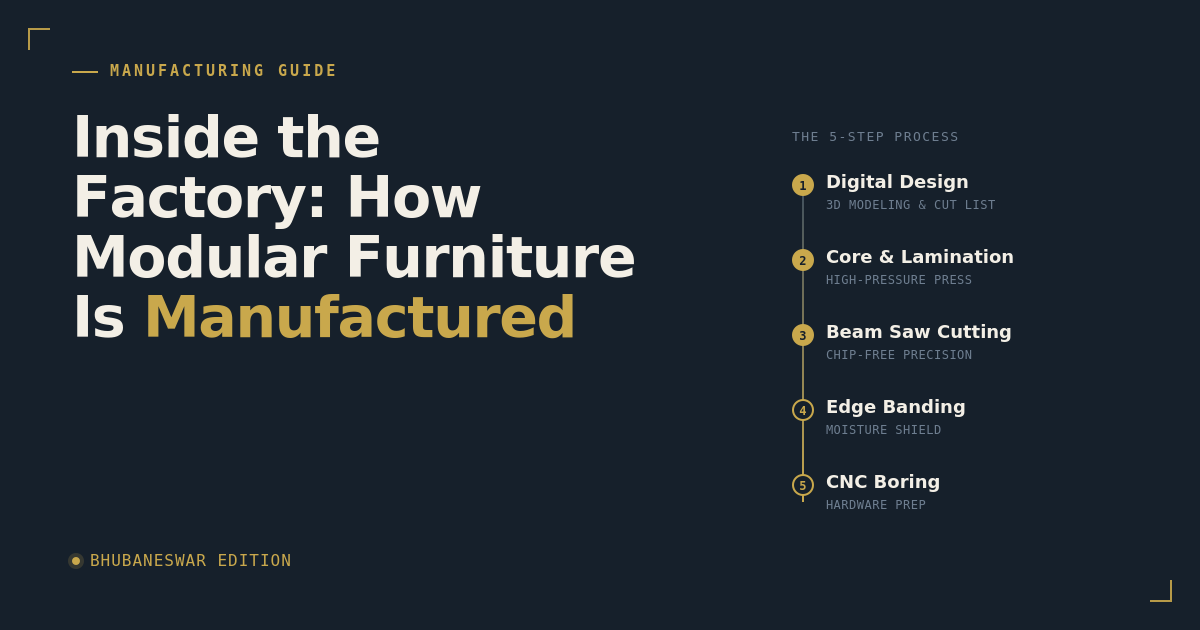
Step 1: Digital Precision (Design & 3D Modeling)
Before a single sheet of wood is touched, the entire piece is built digitally. This starts with accurate site measurements, followed by 2D and 3D AutoCAD modeling to finalize dimensions, and finally a “cut list” — the precise schedule of every panel size needed for the piece.
This digital-first approach matters more than most homeowners realize: cutting software calculates the most efficient way to lay out panels across a wood sheet, minimizing waste and keeping costs predictable. It’s also how firms like Concepts & Designs use state-of-the-art visualization software to show clients exactly how a kitchen or wardrobe will look — down to the finish and hardware — before any cutting begins.
Step 2: Selecting the Core & High-Pressure Lamination
The “core” is the base material your furniture is built on, and the choice here affects everything from cost to lifespan:
- MDF (Medium-Density Fibreboard) — smooth, ideal for painted or high-gloss finishes, but less moisture-resistant.
- Commercial Plywood — a common mid-range choice, reasonably strong but not fully waterproof.
- BWR (Boiling Water Resistant) Plywood — the preferred core for humid climates, built to resist swelling and delamination.
Once the core is selected, decorative laminates or acrylic sheets are bonded to it using industrial cold-press machines and heavy-duty adhesives under controlled pressure and temperature. This is the single biggest reason factory-pressed lamination doesn’t bubble, peel, or lift at the edges over time — something that’s far harder to guarantee with manual, hand-pressed carpenter work done on-site.
Step 3: Precision Cutting via Beam Saws
Once the laminated boards are ready, they’re cut using automated panel saws (beam saws) that follow the digital cut list generated in Step 1. These computer-guided machines cut through large engineered wood sheets with chip-free precision, accurate down to a fraction of a millimeter.
This is where factory manufacturing pulls dramatically ahead of manual carpentry — a hand saw simply cannot replicate this level of consistency across dozens of panels, which is exactly what a multi-unit wardrobe or full kitchen requires.
Step 4: Heavy-Duty Edge Banding (The Moisture Shield)
Every cut panel has raw, exposed edges — and in a coastal, humid climate like Odisha’s, an unsealed edge is an open invitation for moisture, swelling, and termites.
This is solved with PVC edge banding: a strip of matching material is fused onto every raw edge using hot-melt glue and then automatically trimmed flush by machine. It sounds like a small detail, but it’s arguably the single most important step for long-term durability. Perfect edge banding is what fully protects modular cabinets and wardrobes from humidity, steam, and pest damage — while poor or hand-applied edge banding is often the first place carpenter-built furniture fails.
Step 5: CNC Boring & Hardware Prep
The final manufacturing step uses CNC (Computer Numerical Control) machines to drill precise pilot holes for hinges, shelf-support channels, and cam-lock connectors — all pre-programmed to match the exact hardware being used.
Because every hole is machine-drilled to spec, there’s no manual hammering or guesswork involved, which means zero risk of wood splitting during assembly — a common issue when carpenters drill by hand on-site.
Why Factory-Made Modular Furniture Beats Traditional Carpenter Work
| Feature | Factory-Made Modular | Carpenter-Built Furniture |
|---|---|---|
| Finish | Flawless, machine-pressed edges | Uneven, hand-cut seams |
| Precision | 100% exact via digital cut lists | Prone to human measurement errors |
| Timeframe | Delivered and installed in days | Weeks of dust and noise at home |
| Durability | High moisture and termite resistance | Standard glue vulnerable to peeling |
Looking for the Best Modular Furniture Manufacturer in Bhubaneswar?
If you’re planning a kitchen, wardrobe, or full home renovation, it’s worth being selective about who actually manufactures your furniture — not just who designs it. Unverified local workshops may offer lower quotes, but they rarely have access to industrial beam saws, CNC boring machines, or controlled lamination presses.
Concepts & Designs is a veteran design firm in Bhubaneswar, established in 2005, that bridges the gap between custom interior aesthetics and precise modular engineering. Their core specialities include:
If you’re comparing manufacturers more broadly, our own directory of best interior designers is a useful starting point as well.
Conclusion & Next Steps
True modular furniture is a product of high-tech manufacturing — digital design, industrial lamination, precision cutting, moisture-proof edge banding, and CNC hardware prep — not a hand-built approximation of it. That process is exactly what gives you sleek lines, long-term durability, and installation timelines measured in days rather than weeks.
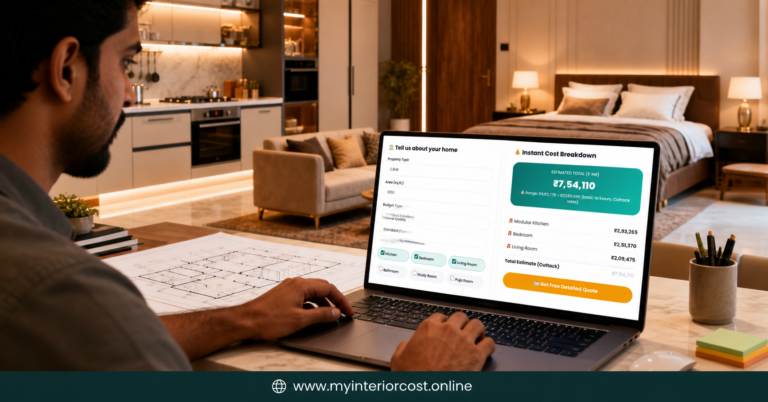
Before you finalize your kitchen or wardrobe project, it also helps to know your rough budget. Use our free interior cost calculator to get an instant, city-adjusted estimate based on your space and finish preferences, or browse our design gallery for inspiration.
Ready to plan your layout and bring factory-grade precision into your Bhubaneswar home? Consult the team at Concepts & Designs to get started.
Frequently Asked Questions
Is factory-made modular furniture more expensive than carpenter-built furniture?
It can have a slightly higher upfront cost, but the gap in finish quality, durability, and moisture resistance usually makes it more cost-effective over the furniture’s lifespan.
What is BWR plywood and why does it matter?
BWR (Boiling Water Resistant) plywood is treated to resist moisture and swelling, making it the preferred core material for humid coastal regions like Odisha.
Why does edge banding matter so much?
Unsealed panel edges absorb moisture and are vulnerable to termites — proper PVC edge banding is what keeps modular furniture structurally sound for years.
How long does factory-made modular furniture take to install?
Since panels arrive pre-cut, edge-banded, and pre-drilled, on-site installation typically takes only a few days, compared to weeks for carpenter-built work.
Where can I get modular furniture manufactured in Bhubaneswar?
Concepts & Designs is an established modular furniture manufacturer in Bhubaneswar, offering kitchens, wardrobes, and full home interiors.
Planning your modular kitchen or wardrobe? Get an instant estimate with our interior cost calculator, explore design inspiration, or contact us to get connected with the right team for your project.